Homily for Amshir III – John VI: 27-46
AMSHIR III
John VI: 27-46
Today’s Gospel actually overlaps with the one read on the first Sunday in Amshir as it begins with verse 27 with which the other lection concluded, where our Lord warned the multitude not to labour for the food which perishes, but for the food which endures to everlasting life. They asked him what they must do to do the works of God and the Lord responds by telling them that they must believe in Him whom He has sent. They understand that He is referring to Himself, so their response is to ask Him what sign He will give them that they may believe in him. They reminded him that Moses had given them manna – a miraculous food – during their wandering in the wilderness, rather forgetting that in spite of it providing sustenance on a daily basis for 40 years, they had been notably unappreciative of this miracle and had complained about it, saying they loathed this “light bread”. Our Lord tells them that it was not Moses who gave them the bread; but that the true bread from heaven comes from His father and gives life to the world. It is clear from their answer, imploring that He gives them this bread always, that they are still thinking in material terms. We recognise the same response in the Samaritan woman at Jacob’s well when our Lord tells her that whoever drinks of that water shall never thirst and she initially thought that He meant natural water.
However, He declares that He Himself is the bread of life and all who come to Him shall not hunger and those who believe in Him shall never thirst. He makes it quite clear that He is not talking of physical bread which merely satisfies bodily hunger; but he is talking of that bread which as St Cyril of Alexandria states, “refashions the entire living being to eternal life. The human being, who has been created for eternal life, is now given power over death.” St Cyril goes on to explain this rather well by asking the question, “what then does Christ promise?” It is nothing corruptible, like earthly food, but rather “that blessing in the participation of His holy flesh and blood that restores humanity wholly to incorruption so that it should need none of the things that normally drive off the death of the flesh, for example, food and drink” and goes on to encourage the faithful to regular communion lest “they exclude themselves from eternal life in as much as they decline to be enlivened.”
The motivation of love which underpins the incarnation is movingly expressed by our Lord’s words, “this is the will of the father who sent me, that of all He has given me I should lose nothing, but should raise it up at the last day” and “then everyone who sees the son and believes in Him may have everlasting life.”
Sadly, they still fail to comprehend his meaning and murmur among themselves asking how He can talk about coming down from heaven when He is the son of Joseph and Mary. How are we to understand the fact that some people so readily opened their hearts and accepted our Lord’s ministry, whilst others appear to have been deaf and blind to all that he said and did ?
Perhaps the key for us in understanding this are His words towards the end of this passage, “No one can come to me unless the father who sent me draws him.” This image of people being ‘given’ or ‘drawn’ by God shows that belief is no accident and is certainly not the work of human reasoning. It is indeed a gift and, like all gifts it is free. But why, we may ask ourselves, do some receive the gift and others do not? Is it like some divine lottery? Saint Augustine suggests that it depends on our state of heart and that the humble person who delights in the truth, and seeks after blessedness and righteousness will be drawn to God by love. He writes, “Give me one who loves, who longs, who burns, who sighs for the source of his being and his eternal home, and he will know what I mean.” True goodness is actually a very compelling and attractive quality but we sometimes find it difficult to recognise it because the people we expect to manifest it, don’t seem to be any better than the rest of us, and the answer is they’re probably not, because “all have sinned and fall short of the glory of God” (Romans III: 23). Yet equally even the most difficult people we encounter will have some redeeming quality and be capable of some selfless act, some little kindness, some inner integrity.”
In the Song of Solomon (III: 1-2) we read, “By night on my bed I sought the one I love; I sought him, but I did not find him. ‘I will rise now,’ I said, ‘and go about the city; in the streets and in the squares I will seek the one I love.’ I sought him, but I did not find him.” The church has always understood this as representing the yearning of the soul for God with some writers suggest that the night symbolises our spiritual darkness through the absence of God. I have always loved the words of the 18th century hymnographer, Bishop Thomas Ken,
“Heaven is, dear Lord, where’er Thou art
O never then from me depart;
For to my soul ‘tis hell to be
But for one moment void of Thee.”
May we all recognise that call from God and let it draw us ever closer to Him that we may find Him and by receiving spiritual nourishment may be raised up on the last day and have everlasting life.
Hermits or the Solitary Monastic life
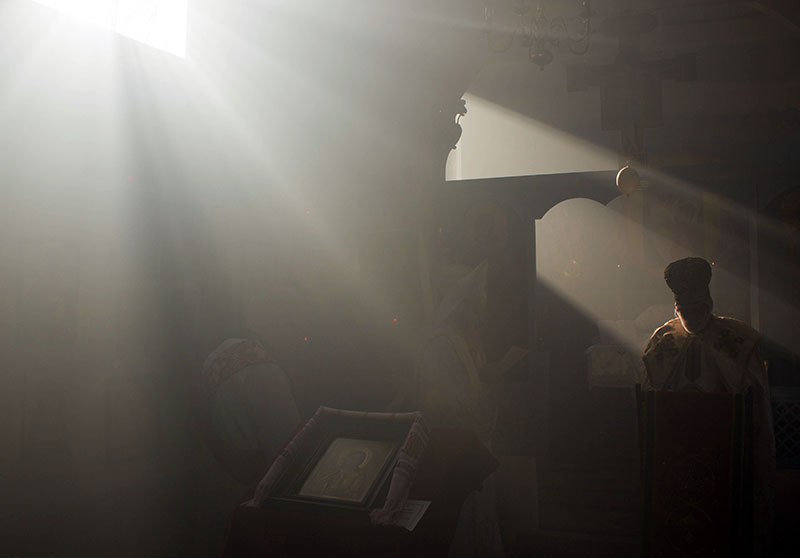
Ever since the earliest days of the church, people have felt called to dedicate their lives to God in chastity. Some have joined monasteries but many have felt the call to live the solitary monastic life under the auspices of a bishop, and under the guidance of a spiritual father or mother, who may or may not be the bishop. After a period of discernment, aided by the guidance of a bishop and a spiritual father or mother, vows may be taken. Those leading the solitary monastic life need to be financially self-supporting. They live in their own homes and do not give up their money or property, rather choosing to manage their material goods according to gospel values. They are either single, divorced or widowed.
Today some people in the church do not understand the call to the solitary monastic life. Not everybody is able to live in a religious community, and many solitaries cannot even consider this option due to ill health. We need to respond positively to this call and give support and encouragement to those living the solitary monastic life. We need to increase awareness in the church of this call and the blessings that it brings.
If you feel this life may be for you, please contact Abba Seraphim or Father Alexis, a solitary who lives in Lincolnshire, via [email protected]
Recent ordinations at Cusworth

On Sunday, 29 January, at St. Mark & St. Hubert’s British Orthodox Church in Cusworth Village, near Doncaster, Abba Seraphim performed two ordinations to strengthen the diaconal ministry. Reader Athanasius Hall was ordained a subdeacon attached to the Church Secretariat in Charlton, but also to generally assist Abba Seraphim in his wider ministry to other parishes outside London. At the same service Subdeacon Antony Westwood was ordained a full Deacon with pastoral responsibility for the West of England, centred on the shortly-to-be-established British Orthodox Mission of Torbay, under the patronage of St. Petroc. Among the clergy assisting at the ordination were Father David Seeds, parish priest at Cusworth; Archdeacon James Maskery and Monk Alexis Raphael from Lincoln. After the Liturgy the Cusworth congregation provided a light buffet lunch, during which there was warm fellowship. It was also with much pleasure that Hazel Rockliff, a long-standing member of the Cusworth congregation, now confined to a wheelchair, was welcomed back to church after several weeks’ absence through ill health.

British Orthodox Pilgrimage to Croyland
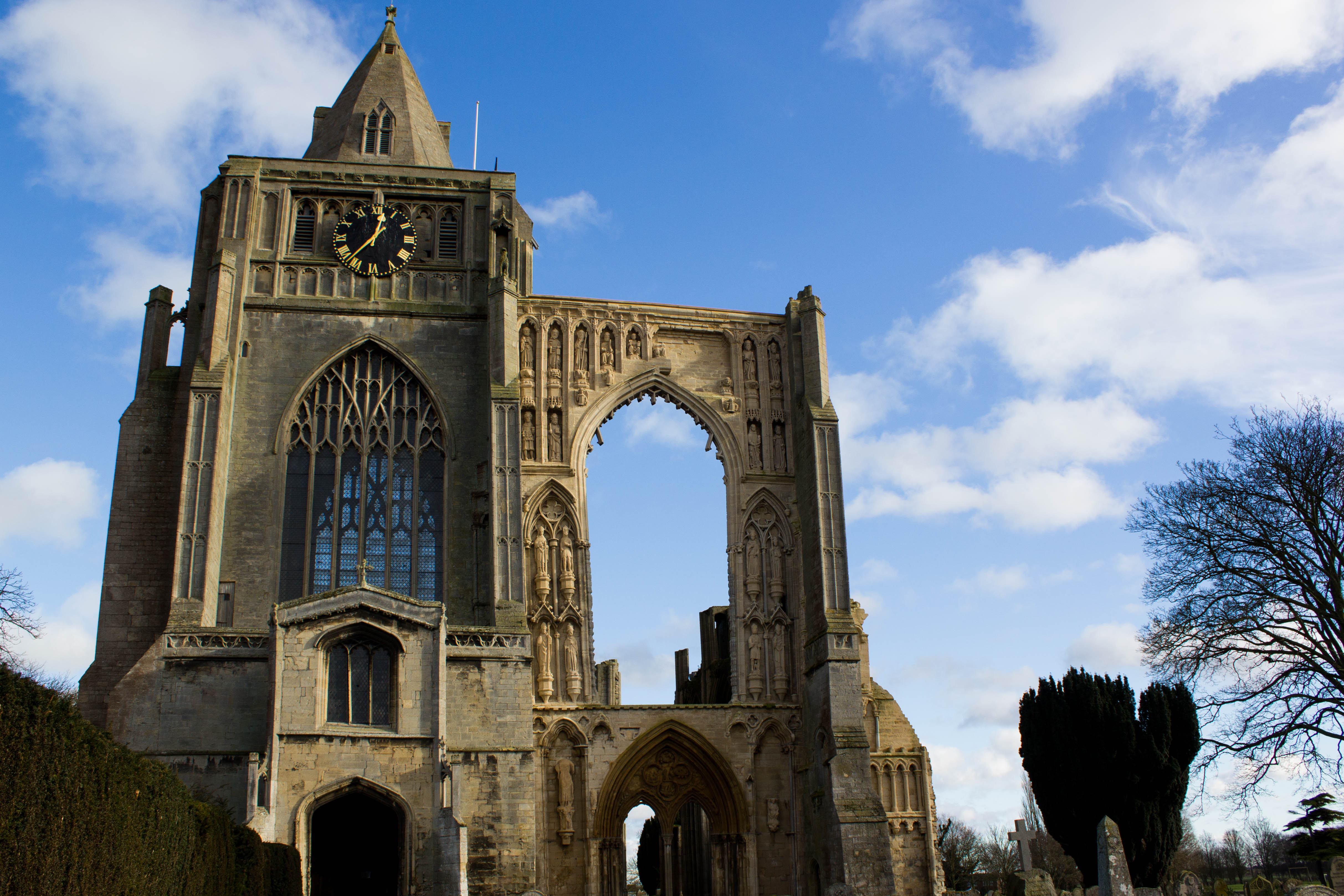
On Saturday, 28 January, Abba Seraphim led a group of pilgrims from London and Lincolnshire, on a visit to Croyland Abbey at Crowland in Lincolnshire.
In the 8th century the area was wild fenland in one of the remotest and mostly desolate parts of the Saxon Kingdom of Mercia. It was here, that Guthlac, a young nobleman and monk at the monastery of Repton in Derbyshire, decided to establish an island hermitage. Although he died quite young in 714, his sanctity and ascetic life had a considerable impact on his contemporaries and, within two years of his death, a monastery was built on the island and survived for more than eight centuries until its suppression by King Henry VIII. After that the magnificent Abbey fell into ruins, with only the 15th century tower and the north aisle surviving as the present-day parish church. After viewing the many fine surviving architectural features of the church and the ruined remains of the old monastery, including the Parvise Chapel above the porch, where is kept a skull, believed to be that of Abbot Theodore, martyred by the Danes whilst at prayer in 870; Abba Seraphim led the pilgrims in prayer honouring St. Guthlac and invoking his patronage. The courtesy and assistance of the small team of volunteer guides, who are available every day to assist pilgrims and other visitors, was greatly appreciated. After leaving the Abbey, Abba Seraphim led the pilgrims into the town, where they also viewed the “Trinity Bridge”, built between 1360-90, to replace one built by King Æthelbald of Mercia at the same time as the original monastery. It is an unique three-way stone bridge, which once spanned the confluence of the River Welland and one of its tributaries. Now marooned in the centre of town some way from the river-front, it is a reminder of how the drainage of the fens transformed the wilderness to which St. Guthlac retreated and made the area habitable.
Funerals at Cusworth
On 23 December, Father David Seeds conducted two funerals on the same day; one for a local resident and another for a neighbour in the adjoining county. Graham Moore, aged 68, of Cusworth, was cremated at the Rose Hill Crematorium in Doncaster, followed by his family attending at the Cusworth Church for the burial of his ashes. Later that day, Father David had to travel to Chesterfield to conduct the funeral of a neighbour from Ashover in Derbyshire, the village where Father David lives.
On 17 January, following a request from a Greek Orthodox family for an English-speaking Orthodox priest to conduct their mother’s funeral at Rose Hill, and having met with the family, Father David conducted the funeral of Mrs. Lita Brelsford. She came to Britain after the Ionian earthquake (also known as the Great Kefalonia earthquake) in August 1953. Damage was very heavy in Zakynthos’ eponymous capital city. Only two buildings survived there; the rest of the island’s capital had to be rebuilt. Argostoli, the capital of Kefalonia, suffered substantial damage and all of Kefalonia’s buildings were flattened except for those in Fiskardo in the far north. As well as causing major destruction on the two islands, the economic impact was far greater, and damage was estimated to have totalled billions of Drachmas. Many people fled the island: but the majority emigrated from Greece entirely leaving both the islands and their economy in ruins. All her large family were British-born. Father David commented that it was a privilege to support her family in this way.